 businessscales
What is conversational AI is usually asked when businesses start noticing a pattern. Calls are coming in. Leads are interested. But responses are slow, missed, or inconsistent.
We have seen this across real estate offices, insurance desks, and car dealerships. Not because teams don’t care. But because humans don’t scale well when conversations pile up at the same time.
That gap between customer expectation and human availability is where conversational AI enters. Not as a replacement for people. But as a system that keeps conversations alive when humans can’t pick up every call.
What Is Conversational AI? A Clear Definition for Business Leaders
What is conversational AI? It is a question many people are asking today as conversations move from screens to real-time interactions. Conversational AI is technology that allows machines to understand and respond to human language through voice or text. The goal is simple -make interactions flow naturally, without scripts, pauses, or friction, so conversations feel ongoing rather than mechanical.
It relies on Natural Language Processing and Machine Learning. NLP(Natural Language Processing) helps the system understand intent, not just words. Machine learning helps it improve with every interaction.
At its core, conversational AI combines understanding and response. NLU(Natural Language Understanding) figures out what the person means. NLG(Natural Language Generation) decides how to reply clearly and correctly.
This is what powers modern voice agents, virtual assistants, and intelligent chat systems. The difference today is not capability. It is reliability at scale.
How Conversational AI Actually Works Behind the Scenes
A conversational AI system works in layers. Each layer has a specific job.
First comes input. A customer speaks or types. Automatic Speech Recognition converts voice into text.
Next is understanding. NLP and NLU analyze intent, context, and keywords. This is where the system knows whether someone wants to book a visit or ask a policy question.
Then comes logic. Dialog management decides the next step. Ask a follow-up. Confirm details. Trigger an action.
Finally, a response. Natural Language Generation forms a reply. Text-to-speech delivers it smoothly in voice interactions.
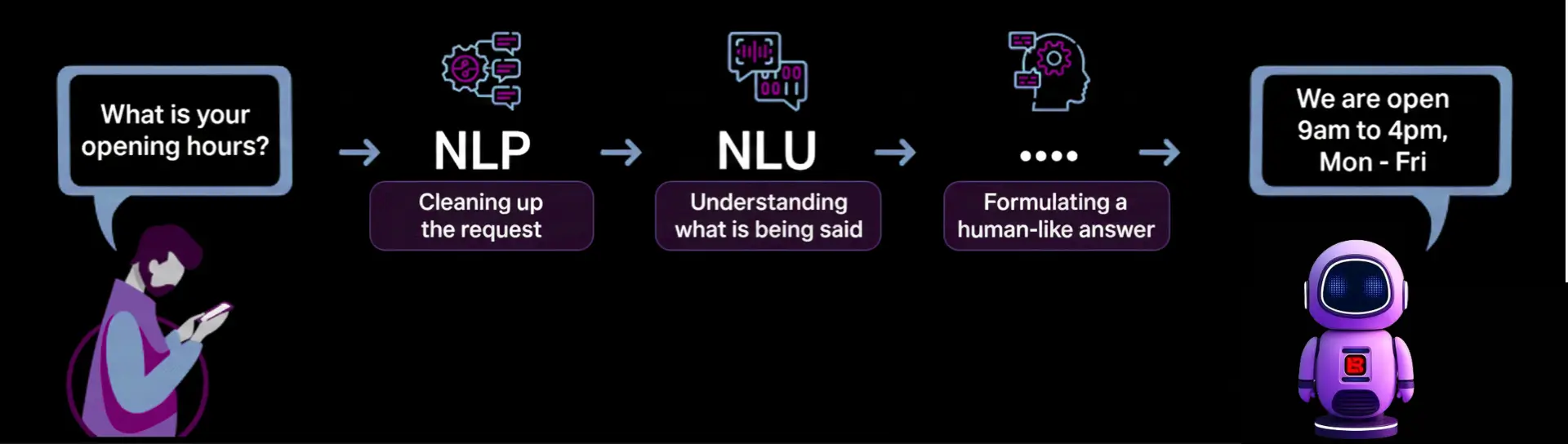
Over time, machine learning improves accuracy. Mistakes are reduced. Responses feel more natural.
From Rule-Based Bots to Intelligent Conversations
Early systems were rigid. They followed scripts. If the question did not match, the system failed.
Machine-learning chatbots improved this. They recognized patterns. But the context was still weak.
Modern conversational AI understands tone and flow. It handles interruptions. It remembers earlier parts of the conversation.
This evolution matters most in industries where conversations are emotional and time-sensitive. Buying a home. Choosing insurance. Purchasing a car. These are not checkbox decisions.
Why Voice AI Is Leading Conversational AI Adoption
Voice brings urgency. A call usually means the customer wants action now. Text can wait. Calls cannot. Voice AI answers instantly. Even during off-hours. Even when all agents are busy.
This matters globally. In the US, Canada, the UK, and beyond. Markets differ, but expectations are the same. People want to talk. And they want answers without delay.
Conversational AI vs Chatbots: The Practical Difference
Chatbots organize information. Voice AI protects opportunity.
Chatbots wait for input. Voice AI responds in real time.
For low-intent browsing, chat works.
For high-intent decisions, voice matters.
This difference becomes clear when revenue depends on conversations.
Missed calls don’t come back.
Missed chats sometimes do.
What is conversational AI solving that businesses feel every day?
It prevents silence. Silence after a call attempt often means lost trust.
Conversational AI ensures every inquiry is acknowledged. Every question is answered. Every next step is clear. That reliability changes how customers feel. And how teams work.
Real Estate: Turning Conversations Into Property Visits
In real estate, timing is everything. A buyer who calls today may book tomorrow or move on.
We worked with agencies where agents handled 40 to 60 calls a day. Most were repetitive. Rent, buy, sell, pricing, location. Serious buyers got mixed with casual inquiries. Missed calls caused stress.
Voice AI changed this flow. Every call was answered. The system asked key questions. Budget. Timeline. Location. Only serious leads reached agents. Property visits were booked automatically. Confirmations were sent instantly by email.
Agents stopped worrying about missed opportunities. They focused on meetings, negotiations, and relationships.
Insurance: Reducing Repetition Without Losing Trust
Insurance teams face constant repetition. Policy coverage. Premiums. Renewals. These questions are important. But answering them repeatedly drains time.
Voice AI handles these conversations patiently. At any hour. With consistent accuracy. Complex cases still reach human agents. But routine queries do not interrupt their day.
Follow-ups are handled automatically. Based on logic, not guesswork. This saves time. And maintains trust.
Car Dealerships: From First Call to Test Drive
Car buyers often call before visiting. They want availability. Pricing clarity. Test drive slots. Voice AI books test drives instantly. Answers model-specific questions. Handles finance basics.
In 2026, this extends further. Voice AI can maintain schedules. Handle service reminders and keep up with the new model updates.
When new inventory arrives, the knowledge base updates. The AI adapts without retraining the team. As a result, sales teams stay focused, and customers stay informed.
Customization, Learning, and Intelligent Follow-Ups
Modern conversational AI is flexible. It can be trained with new knowledge. It can adapt workflows. If a real estate agent is on vacation, calls are rerouted. If insurance terms change, responses update. If follow-up timing varies, logic adjusts.
Some leads need reminders. Some need space. Voice AI follows rules you define. This removes manual chasing and reduces mental load.
Business Impact That Feels Real
Conversational AI does not create demand; it protects it. Response times improve. Lead leakage has reduced. Work becomes predictable.
Teams feel less pressure. Customers feel heard. That combination drives growth quietly without chaos.
Final Thoughts
Conversational AI is not about replacing human conversations. It is about preserving them.
When businesses understand what conversational AI is, they realize its real value is simple.
No missed calls.
No forgotten follow-ups.
No unnecessary stress.
That is why companies across real estate, insurance, and automotive are adopting it worldwide.